

Why AI-Generated Ads Are Hurting Brands More Than They Realize
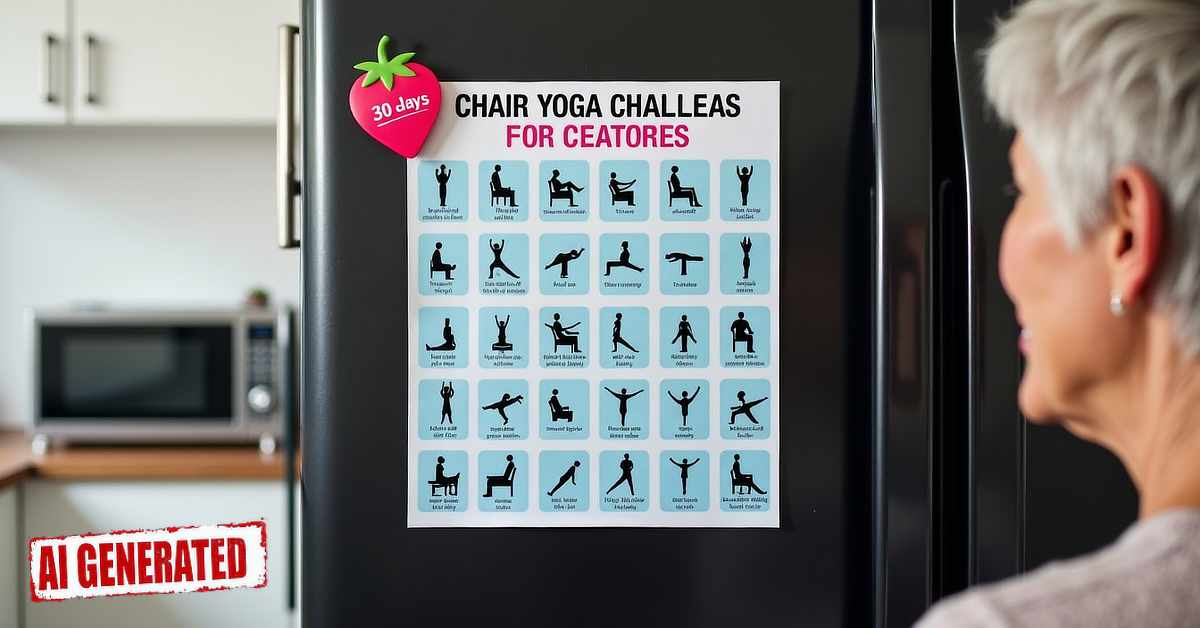
Lately, I’ve been seeing more and more AI-generated images in digital ads — and as a designer, I find it genuinely concerning. One recent example stopped me mid-scroll: a fridge with a calendar stuck to it, filled with misspelled words like “challeas” (challenge) and “ceatores” (seniors). Beyond the text errors, the entire image had that unmistakable AI look — distorted details, calendar dates in the wrong places or repeated in a few places, and a general lack of intention.
It wasn’t just a flawed ad. It was a warning sign.
Brands and businesses are getting swept up in the promise of saving time and money by using AI to generate ads, graphics, and even brand assets. But in the rush to automate everything, the quality of content is starting to slip — and audiences notice.
A Quick Transparency Moment
To be completely open: I do use AI in parts of my creative work.
But AI is never the whole process. It’s not my designer, and it’s not my brain. I value my creativity and ability to think for myself far too much to hand that over. And when I do use AI, it’s always in an ethical, supportive role — never in a way that infringes on someone else’s work or replaces human decision-making.
The Limitations of AI Images (From Someone Who Actually Uses These Tools)
Because I work with AI tools, I know their strengths — and their limitations. Even the very best models struggle with consistency, nuance, and contextual accuracy.
AI learns from patterns in its training data. Humans learn from experience.
We have emotions, memories, instincts, and lived context. AI doesn’t. It can simulate the appearance of emotion, but not the lived understanding of how a particular moment, image, or ad makes people feel.
AI doesn’t have a brain-and-eye connection. It doesn’t have chemical reactions that produce joy, empathy, nostalgia, or trust. Those are uniquely human — and they shape how we design.
The “Aesthetic–usability effect” — a well-documented principle in design and UI/UX — shows that when a design looks more aesthetically pleasing, users tend to perceive it as easier to use and more trustworthy, even if function is the same.
So when AI tries to mimic these things, the results often feel… off. Almost right, but not quite.
Why AI in Advertising Is Becoming a Real Problem
This post isn’t about the ethics of AI — that’s a whole separate conversation.
This is about how people perceive your brand when they see AI-generated content.
And the truth is: people can tell. A recent 2025 study comparing consumer preference found that audiences “consistently prefer human-generated artwork” over AI-generated — supporting the idea that AI visuals can negatively affect reception.
You don’t need a graphic design background to spot AI mistakes anymore. The slightly warped edges, the uncanny proportions, the text that dissolves into gibberish — these flaws are obvious.
When customers notice these issues, it sends a message:
The brand didn’t care enough to hire a real designer.
The brand prioritized shortcuts over quality.
The brand chose convenience over connection.
In other words: it feels inauthentic. According to a 2025 article on the “crisis of trust in digital content,” generative-AI media (images, video, etc.) is contributing to growing skepticism online — as people increasingly doubt what they see.
That fridge calendar ad gave me the impression that the brand valued speed and savings over creating the best possible message. And if a brand doesn’t care about its audience, why should the audience care about the brand?
This loss of trust inevitably becomes a loss of sales.
Real-World Case Studies: When AI-Generated Ads Backfired
To show how widespread this issue has become, here are several recent examples of brands — from global corporations to small local businesses — that faced backlash after using AI-generated visuals in their advertising. The common thread in all of these cases is the same: when imagery looks off, feels inauthentic, or sends the message that a business cut corners, audiences react negatively.
Coca‑Cola — AI-Generated Holiday / Christmas Ads (2024–2025)
Their AI-generated Christmas ad campaign was widely criticized for “uncanny,” “soulless” visuals that departed from the brand’s nostalgic, human-driven holiday ads.
News coverage in 2025 notes that even the updated AI campaign was called a “sloppy eyesore” by many viewers, highlighting how AI-powered ads can damage longstanding brand identity.
Guess (via Vogue US) — AI-Generated Models in Fashion Advertising (2025)
Vogue ran a Guess ad featuring AI-generated visuals; the campaign stirred widespread backlash from image professionals, content creators, and readers who viewed it as a dangerous signal for the fashion/creative industry.
The uproar shows how even top-tier fashion brands risk serious public criticism when they replace real humans with synthetic images.
Queensland Symphony Orchestra (QSO) — AI-Generated Promotional Artwork Backlash (2024)
Their use of AI-generated imagery in a promotional ad was publicly criticized for the “uncanny” and unsettling look of the visuals, which many perceived as betraying the authenticity expected from an arts organization.
The instance is often cited among early examples of “AI imagery backlash,” especially in creative / cultural sectors where authenticity and human craft are central.
General Industry Trend — Growing Backlash to AI-Generated Advertising
A 2025 article surveying recent AI-generated campaigns argues that companies in various sectors (retail, consumer goods, entertainment) are starting to feel consumer resistance as audiences become weary of “AI slop.”
According to marketing-industry coverage, despite the rising use of generative AI in ads, many consumers remain skeptical — largely due to quality dips, uncanny visuals, or perceived inauthenticity.
What These Cases Teach Us
Across industries — fashion, food, tourism, arts, tech, small businesses, and even government agencies — the pattern is the same:
Audiences recognize AI imagery more often than brands expect.
AI-generated visuals are frequently perceived as low-effort or inauthentic.
Brands that rely too heavily on AI risk damaging their credibility.
Cutting corners on design rarely works out in the long term.
These examples aren’t outliers; they’re part of a growing trend of backlash tied to AI-first marketing. And they reinforce your central message:
👉 AI may be a useful tool, but it cannot replace the intention, nuance, and emotional intelligence of real designers.
There’s No Substitute for Human Creativity
AI has its advantages, but we cannot lose ourselves — or our standards — in the desire to cut corners.
In my own work, I’ve tried using AI to speed up certain tasks, only to find the opposite happen. I’d get something “almost right,” spend more time trying to fix it, and ultimately create a higher-quality version faster by doing it myself.
Because what AI produces is not design. It’s a statistically generated guess.
So if your business or brand is using AI — or thinking about it — please don’t lose sight of the human element. Your content is being created for people. And people respond to human thought, intention, and care.
AI can assist, but it should never take over. Research suggests that “hybrid” approaches (combining human + AI) tend to produce better brand perception than using AI alone.
Even a small amount of human effort can be the difference between an ad that looks lazy and one that looks polished, intentional, and trustworthy.
And if you truly want your visuals to shine?
Work with a professional graphic designer.
It’s an investment in quality, credibility, and your audience’s trust — something no AI tool can replicate.
Conclusion: AI Can Assist — But It Can’t Replace Us
As AI continues to shape the creative world, it’s easy for brands and businesses to get swept up in the promise of speed, convenience, and lower costs. But the examples above — along with the ads we’re all seeing more often — make something very clear: when companies rely too heavily on AI, it shows. The mistakes are noticeable. The emotional disconnect is noticeable. And the message it sends, intentionally or not, is that the brand chose shortcuts over care.
AI can absolutely be a helpful tool in the creative process. I use it myself in thoughtful, ethical ways. But there is simply no substitute for the intuition, experience, and emotional intelligence that come from human designers. We know how things should feel, not just how they should look. We understand context, storytelling, culture, and nuance — things AI can only mimic, never embody.
If your business is considering AI-generated visuals, don’t let the technology take the wheel. Let it support you, not replace you. Because your audience can tell the difference. And choosing human creativity isn’t just about better visuals — it’s about building trust, authenticity, and long-term relationships with the people who matter most.
A little human effort still goes an incredibly long way. And sometimes, it’s the only way.
Write for Art & Design by Teresa Cowley! Submit your guest post or sponsored collaboration idea on art, design or the creative industry. Share your expertise with a global community of artists and designers.


0 Comments