Home > Blog > Scam Alerts > Why Domestika Plus Needs Scrutiny

Why Domestika and Their Plus Subscription Need More Scrutiny

A woman sits at a desk in a dimly lit office, closely examining a large desktop computer monitor with a handheld magnifying glass. She wears a dark jacket and leans forward with a focused expression. A desk lamp illuminates the workspace, and shelves. Windows with city lights are visible in the background.
Taking a close look at Domestika Plus, but more scrutiny is clearly needed.

Domestika’s long-standing reputation as a trusted creative platform clouded my judgment while working on my first two posts. But as I continued digging, it became clear that serious issues—particularly around the Domestika Plus subscription—were being overlooked.

This post centers on the documented experiences of people who report unauthorized charges. I link to original sources where possible and focus on verifiable details rather than speculation or emotion. The facts will speak for themselves. Like many of the people trying to contact Domestika, it’s been utterly impossible to get any answers out of them about the Plus subscription and what they were doing to fix the problem. It might seem pointless, but it actually says a lot. I’ll share that as well.

To better understand how these issues could happen, I also examined publicly accessible HTML page code on course listings and checkout flows to see whether the purchase mechanics themselves might be causing confusion or unintended outcomes.

This is a deep dive. It is long, but it’s a very important read.

Timeline: When Did Unauthorized Payment Claims Start?

Some reports of trouble with Domestika Plus may have started earlier, but the bulk of them began in 2024.

  • Initial Reports (Early-Mid 2024): Some users reported confusing subscription models and difficulty in finding cancellation options, with complaints on platforms like Reddit appearing as early as February 2024.
  • Widespread Complaints (Mid-2025): A major influx of complaints regarding surprise annual charges of over $300 (often after a small, temporary purchase) surfaced around June, July, and August 2025.
  • Continued Issues (Late 2025 – Present): Reports of similar, unauthorized charges continued through late 2025 (November/December) and into January 2026.

With many thousands experiencing the same thing, this is not a random website or billing glitch. As of right now, there are more than 5000 negative reviews on Trustpilot alone and growing every day.

A Subscription Model that Doesn’t Follow 30 Day Free Trial Standards

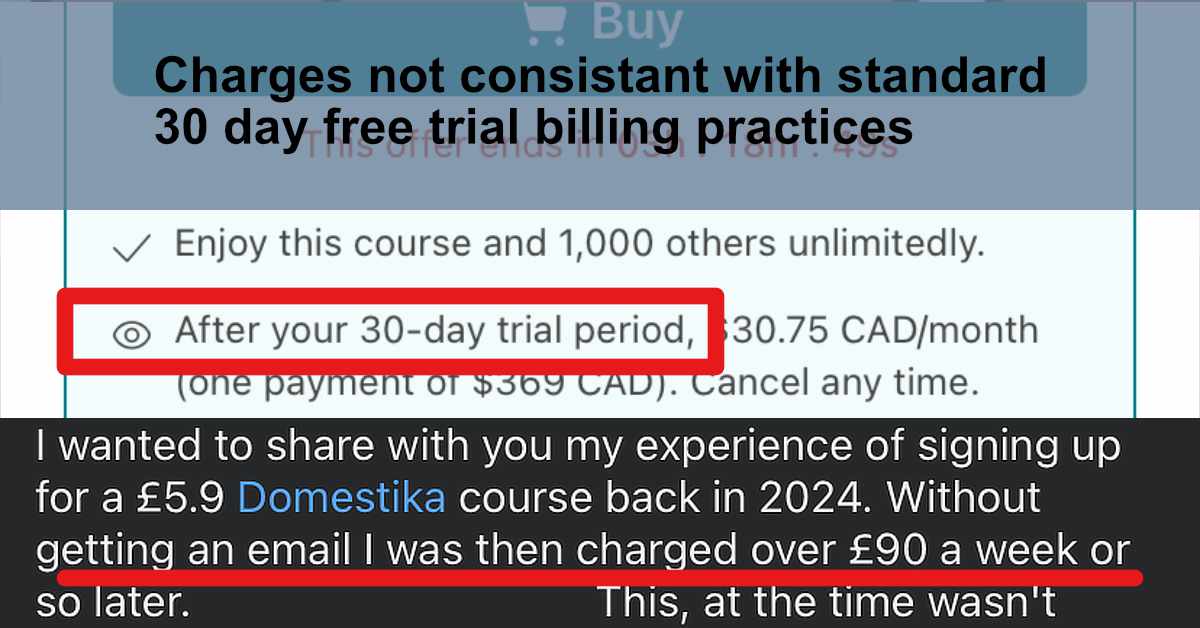
Screenshot of an online subscription checkout and complaint overlay. At the top, bold text reads “Charges not consistant with standard 30 day free trial billing practices.” Below, a subscription section shows “After your 30-day trial period,” alongside pricing of “30.75 CAD/month,” with a red rectangle highlighting the trial text. At the bottom, a black caption bar contains user commentary stating they signed up for a £5.9 Domestika course in 2024 and a week or so later were charged over £90 without receiving an email, with key amounts underlined in red.
In this example, the user bought a course and was charged a week or so later for the Plus subscription. Not 30 as Domestika's terms state. Unauthorized charge information is from this Facebook post

These aren’t just claims. There’s screenshots that show charges that don’t align with standard 30 day free trials according to the FTC. Here are just a few of many user experiences found on Facebook alone.

A user shared transaction history shows repeated automatic payments to Domestika Inc. These do not align with a standard 30-day free trial followed by a single subscription conversion. The presence of multiple automatic payments on the same day, followed by two escalating charges within a 24-hour period, suggests either multiple undisclosed subscription activations or a billing mechanism that does not clearly map to the advertised trial structure. Possibly both.

In another reported case, a user shows their Domestika Plus subscription as having ended in July 2024, with the platform stating that the subscription could not be renewed despite a valid payment method. Despite this, the user was charged in January 2026 — approximately 18 months later — with two separate charges on the same day. This timing does not align with a 30-day free trial, nor with a standard annual renewal cycle. Even when accounting for regional pricing or delayed processing, charges occurring long after a subscription is shown as ended fall outside what users would reasonably expect from a transparent subscription model.

In this case, the “free trial,” Domestika Plus appears in purchase history as a completed order with an order number and date, even when no payment has yet been made. This indicates the subscription is created and recorded as a purchase with billing delayed until the trial renews — a structure that does not align with standard free-trial implementations. Because no money was paid for the trial, there wouldn’t have been a payment method notification meaning there was no opportunity to cancel in time.

In this case, the user was charged just 14 days after the start of the 30 day free trial and again after the subscription was cancelled. The receipt shows $0 billed the day after cancellation. Just like the post above, it was treated as a purchase. I want to keep my post fact based, so I will phrase this only as a question; did the subscription get added back to the account, or was it truly cancelled?

The pattern and timing of unexpected charges stands out clearly when all of these examples are put together. There are many more experiencing the same things that can be seen across Trustpilot, Facebook, Reddit and others.

How the “Buy” Button Works (Why Plus Gets Added)

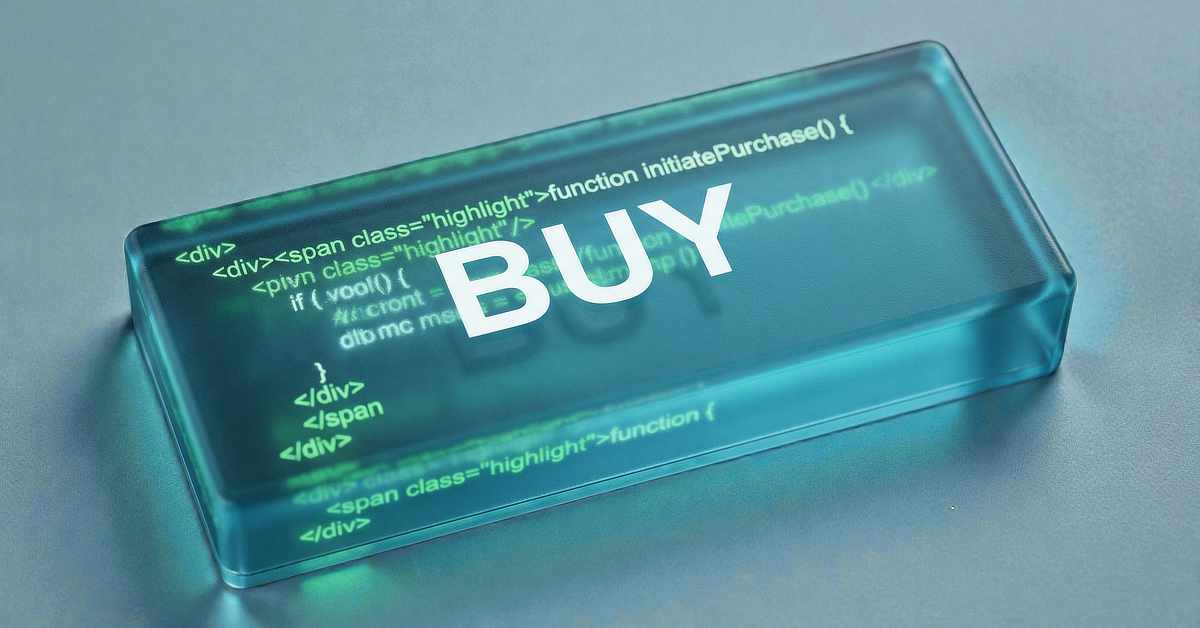
A close-up of a translucent, glass-like rectangular button labeled “BUY” in large white letters. Beneath the surface, faint green programming code is visible, suggesting a digital or e-commerce interface. The button rests on a neutral surface with soft lighting and a shallow depth of field.
Finding unusual Buy button behaviour in page code on a Domestika course offering.

The page code shows at least six distinct Buy button variants, some of which differ in how they add items to the cart. This level of variation is unusual and may increase the risk of unauthorized charges if users encounter button variants with differing purchase mechanics. Domestika has multiple website variations, which may display things differently depending on region or user context. I am located in Canada, so this reflects what I see from my end. 

Clicking “Buy” on a Domestika course page does not appear to initiate a course-only purchase by default. Based on a review of publicly visible HTML page code for a representative course, the primary Buy button for discounted courses is programmed to add two items to the cart at the moment it is clicked: the selected course and a Domestika Plus plan labeled as a “free trial.”

In responsive (mobile) view, only a single Buy button is exposed in the page code, and its programmed to include both the course and the Plus plan as separate products. There is no clearly presented course-only option at the moment the Buy button is clicked. While the button label simply reads “Buy,” the fuller description (“Course + Free trial”) appears only in a hidden element within the page code.

The opt-out occurs later in the purchase flow, at checkout. At that stage, Domestika Plus appears as a separate product that can be removed using a small trash or delete icon. That means there will be two purchase items in the cart after buy is clicked — the discounted course and the Plus “free” trial. Based on what is publicly visible, the removal of Plus does function — but only if the buyer notices that the subscription has been added and manually removes it.

When a full-price course is selected instead of the discounted offer, the publicly visible checkout page code suggests that the Plus add-on is no longer present. Under those conditions, no opt-out option is shown, and the checkout appears to reflect a single-course purchase. In theory, this path should not result in any subscription enrollment. But because the Buy button on the mobile website adds Plus regardless of which option is chosen, there is a possibility Plus will get added unnoticed when purchasing from a phone.

That possibility lines up with user reports that indicate some people are still charged for Domestika Plus even when they purchased a single full-priced course and did not see Plus listed at checkout. This makes it unclear what occurs once the purchase is completed. Removing Plus at checkout — or choosing the full-price option — does not appear to guarantee that the subscription stays out of the purchase flow.

These observations are based solely on page-level behaviour that is publicly accessible. What happens after checkout, at the account or backend level, is not visible to users and cannot be safely tested without risk. Confirming that behaviour would likely require a formal investigation.

What This Means If You’re Trying to Get a Refund

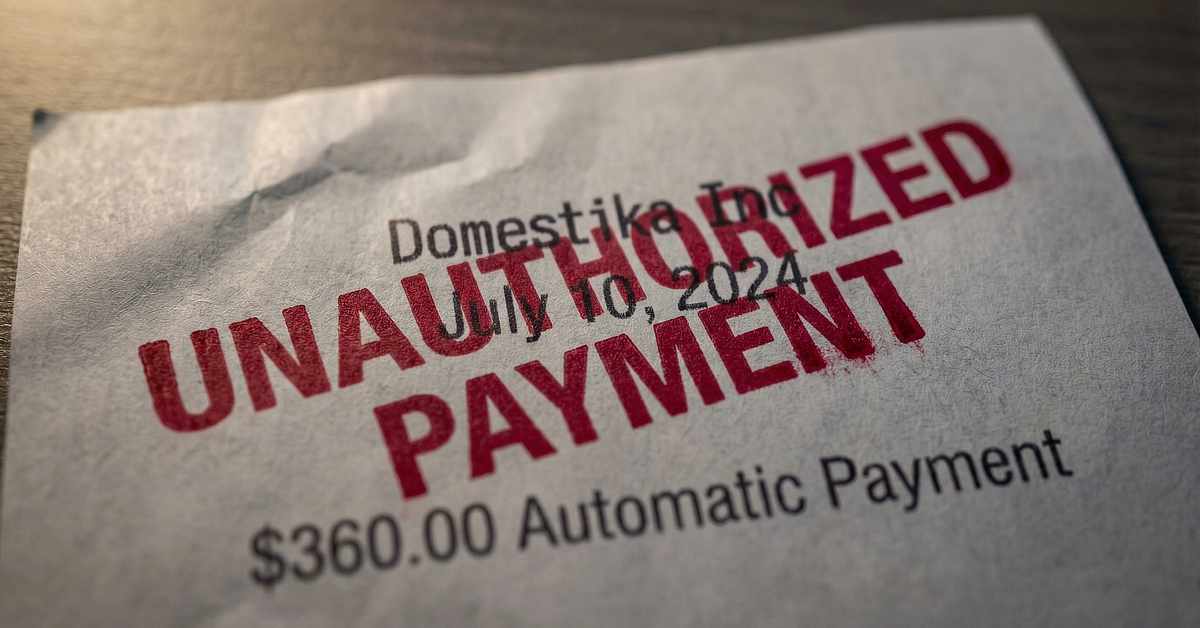
A close-up of a wrinkled paper document on a wooden surface showing the words “UNAUTHORIZED PAYMENT” stamped in large red letters. Underneath it, smaller text reads “Domestika Inc July 10, 2024,” and below it states “$360.00 Automatic Payment.” The paper appears worn and slightly crumpled, emphasizing the seriousness of the charge notice.
The annual charges for a Domestika Plus yearly subscription are quite high. In Canada, it’s $360 CAD which is one of the most expensive subscriptions of this type I’ve seen.

This purchase-style handling of Plus doesn’t stop at checkout — it affects what users see later when charges or refunds come into play. If you’re wondering why Domestika Plus shows up as a “purchase” in your account — even though you thought you were just joining for free or buying a discounted course — this behaviour helps explain it.

The Plus trial isn’t just being offered in the background. It’s actually being added to the cart like a product, even when the price is $0. That means the system can record it the same way it records a purchase, despite how it’s presented to users. The way this flow is designed doesn’t just confuse users — it also creates records that can mislead payment processors into interpreting a free trial as consent to pay.

From a user point of view, anything labeled free or $0 doesn’t feel like a purchase. Most people don’t think they’re agreeing to future charges just by activating a trial. But from a system point of view, completing checkout — even at $0 — can look like consent.

That gap is important, especially when you’re dealing with refunds or disputes.

How this can help in a dispute

If you’re trying to get a refund and you’re told something like “you already had a subscription” or “you completed checkout”, this is the missing context.

What you can calmly explain is:

  • You joined through a free trial or during a discounted course purchase

  • Plus was added automatically and shown as $0

  • You understood this as non-purchasing activity

  • The later charge didn’t match that understanding

You don’t need to accuse anyone of fraud or argue policy. In many cases, it’s more effective to explain the confusion created by the checkout design and why the charge was unexpected.

A quick note before disputing

This information isn’t about making legal claims or assigning intent. It’s about explaining what you reasonably understood at the time.

If you’re submitting a refund request or dispute, stick to:

  • What you saw

  • What you believed “free” meant

  • Why the charge caught you off guard

Clear, neutral explanations tend to go further than emotional or accusatory ones.

I made a zip folder of documents to help explain this in a way PayPal, credit card companies and banks can better understand it. There’s also instructions on how to use them in your refund case (if you would like to).

The “Keep Enjoying” Email and Other Misleading Reminders

Four adults gathered around a desktop computer in an office setting look concerned as they read an email on the screen. The email headline reads, “Your Free Trial Ends in 7 Days,” with a pink “Keep Enjoying” button below. One person points at the screen while others hold their heads or lean in closely, appearing confused or stressed. Coffee cups and office furniture are visible in the background.
The misleading "Keep Enjoying" email is one example of emails reminding users the "free" trial will expire soon. Emails like this are causing confusion leading to missed opportunities to cancel renewals in time.

If you’re thinking “just cancel before the 30 days runs out,” it’s not that simple. One detail that helps explain many of the billing complaints is Domestika’s 7-day free-trial reminder email.

The email tells users they have “7 days left of the free trial of Domestika Plus” and features a large, prominent “Keep enjoying” button. The wording and layout strongly imply that user action is required to continue the subscription.

For a reasonable user, this suggests a clear decision point:

  • Clicking “Keep enjoying” means the subscription continues

  • Not clicking implies the trial will end

But, multiple users report that even when they do not click the button or otherwise interact with the email, the trial is still converted into a paid annual subscription and charged automatically.

Domestika’s public responses state that trials auto-renew unless canceled, but they do not explain the function of the “Keep enjoying” call-to-action or clarify that ignoring the email does not prevent renewal. This lack of clarity is a key source of confusion for many users.

This is another example of misleading “your free trial is ending soon” style emails. There are three reminders leading up to the renewal. All with no clear call to action or instructions on how to either keep or cancel the subscription. The second email has the following in medium grey on a dark grey background making it easy to miss:

“Fine print for the finest readers: This offer is available for Plus free trial members only and can be accessed by clicking this email. This offer is available on the website only. After your 30-day trial period you will be subscribed to the annual plan, $9.17 each/month (One payment of $109.99 each). Cancel any time. Users of the free trial cannot re-enroll in the free trial before a period of 2 years has passed since the unsubscription. This offer is for single use on the website.”

The final reminder email is the only one to have any call to action. “Last days of your trial period. Hurry Up!” If you’re wondering what that’s supposed to mean, I’m right there with you. It’s a confusing series of emails.

Many more users report not getting any reminder emails  at all. This raises the question — “why are some users getting emails, while others do not?

Customer Support: Silence is a Response

A man wearing a headset sits at a desk with a computer and a small sign reading “SUPPORT,” holding a finger to his lips in a “shh” gesture. Behind him, a group of adults stand together with raised hands and confused or frustrated expressions, as if reacting to an unresolved issue. The setting appears to be a modern office or customer support center.
Reaching out to Domestika's customer support to get refunds for unauthorized charges or simply to ask questions is mostly met with auto responses or silence.

Anyone trying to reach Domestika for refunds related to unauthorized payments seems to run into the same wall: template policy responses or complete silence. That’s been my experience as well. I wasn’t even asking for a refund — I simply offered Domestika the chance to clarify how the Plus free trial works. The response was the same: automated policy replies, then nothing.

I’ve seen a template response Domestika repeatedly posts under Trustpilot reviews. That reply alone would have answered a few of the questions I sent by email and through social media. But they didn’t even send that to me.

There’s also no customer service phone number listed on Domestika’s website. I went looking and found a contact number through a Better Business Bureau profile for Domestika. It wasn’t helpful. Calling it only plays a recorded message that recites a policy statement and then disconnects. There’s no option to speak to anyone — not even for issues unrelated to subscriptions.

Here’s the full transcript of the recording:

“You have reached Domestica, the largest online creative community. If you called about an issue related to an incorrect payment, we remind you that you can request a return from your user profile. To contact us, please visit our website, domestika.org, or send us an email to hello@domestika.org. Thank you.”

After that, the line goes dead.

Based on public records, the number does appear to belong to Domestika, Inc. It’s a non-fixed VoIP number — essentially a virtual phone number that isn’t tied to a physical location or a specific phone line. On its own, that doesn’t mean much. Plenty of legitimate companies use VoIP systems. What stands out here isn’t the number itself, but how it’s used. There’s no way to reach a real person at all.

Content Moderation? Visibility Patterns in Tagged Facebook Posts

A split-screen screenshot of Facebook in dark mode. On the left, a search results page shows a query for “Standard 30 day free trial practices” within “Domestika,” with a message below stating, “We didn’t find any results.” On the right, a Facebook post by “Art and Design by Teresa Cowley” discusses Domestika subscription disputes, explaining why charges may be denied as “unauthorized activity” and arguing they should be framed as billing issues. The post includes hashtags about consumer awareness, subscriptions, and billing disputes, and a linked graphic titled “Why Domestika Disputes Get Denied (and How to Fix It).”
Screenshots of a post on my Facebook page with tips on how to better dispute Unauthorized Domestika charges. I tagged their page and it was visible under the Mentions tab. Days later I searched the page with keywords "Standard 30 day free trial practices" and it was gone from their page.

As part of my research for this post, I looked at publicly visible Facebook posts tagged to Domestika using common keywords used by customers describing billing and subscription issues. Despite a high volume of complaints reported across forums, groups, and reviews, the number of tagged posts surfaced through keyword searches on Domestika’s Facebook page was unexpectedly low.

Several searches returned overlapping results, with the same posts appearing across multiple keywords. This suggests that only a limited number of tagged content is publicly discoverable.

During my research, I posted an informational post tagged to Domestika explaining a better way to dispute unauthorized charges which stayed live and properly linked, but did not appear in Domestika’s public Mentions tab or in page-level keyword searches.

This suggests selective suppression of tagged visibility rather than removal of the posts themselves. No notification or explanation was provided in my case. Which appears to support user claims of missing content. It’s not that posts are being deleted, but simply hidden from the Mentions tab of Domestika’a Facebook page.

Why you may see different results: Publicly visible tagged posts can vary by region and page version, meaning the same content may appear on one localized page but not another. Take my tagged post, for example. It shows up on Domestika’s Spanish Facebook page, but it’s nowhere to be seen on the English page. I’ve checked more than once.

Why This Issue Should Not Be Ignored

The ASA has ruled in favour of complainants who were misled by Domestika’s advertising. That decision should prompt consumer protection agencies to take a broader look at the company as a whole. A confusing “free” trial that results in unauthorized charges, misleading emails—or no emails at all—and an unresponsive customer support system are not practices that align with what’s expected of a legitimate business.

It’s difficult to understand how this has been allowed to continue for over two years without meaningful scrutiny. The sheer volume of people attempting to recover money for charges they never knowingly agreed to should have been a clear warning sign—not just for regulators, but for payment processors as well.

For now, the most effective step is continued awareness. I strongly encourage consumer-protection advocates, content creators who cover these issues, and news media outlets to take a closer look at Domestika’s practices. The warnings are already there, buried in countless customer reviews, yet meaningful coverage remains scarce.

Until these practices are properly investigated and addressed, Domestika represents a clear and ongoing risk to consumers. I cannot recommend the platform in any capacity. Public accountability, regulatory review, and transparent reporting are now essential — not optional.

More From Art and Design By Teresa Cowley
Three large spiral designs carved into stone. There is a mossy coverage over a part of the design but it doesn't obscure it.
Spirals in Art: A Timeless Tapestry
Step into the mesmerizing world of spirals in art and design! My latest post explores the enchanting...
How to Make Abstract Art Like a Pro_ Easy Steps for Beginners
How to Make Abstract Art Like a Pro: Easy Steps for Beginners
In abstract art, your thoughts come out as color and movement rather than words. It’s not about confusion;...
Lanczos 3 Algorithm
Choosing Lanczos-3: Separable vs. Non-separable
Unlock the magic of image resizing with the Lanczos-3 method! Dive into the nitty-gritty of separable...

Digital artist and graphic designer, Teresa Cowley

My name is Teresa Cowley, and I'm a digital artist and graphic designer from Vancouver Island, Canada. I focus on abstract and fantasy art as well as digital collage, and like to utilize AI art tools as part of my design process to create new, innovative pieces of art. I strive to create new, unique designs that tell imaginative stories, and I am eager to push the boundaries of what can be expressed with art and technology.

0 Comments

Leave a Reply

Avatar placeholder

Your email address will not be published. Required fields are marked *