
Home > Blog > Guest Posts > The Material-First Character Design Process

Let the Material Lead: A Material-First Approach to Designing Characters

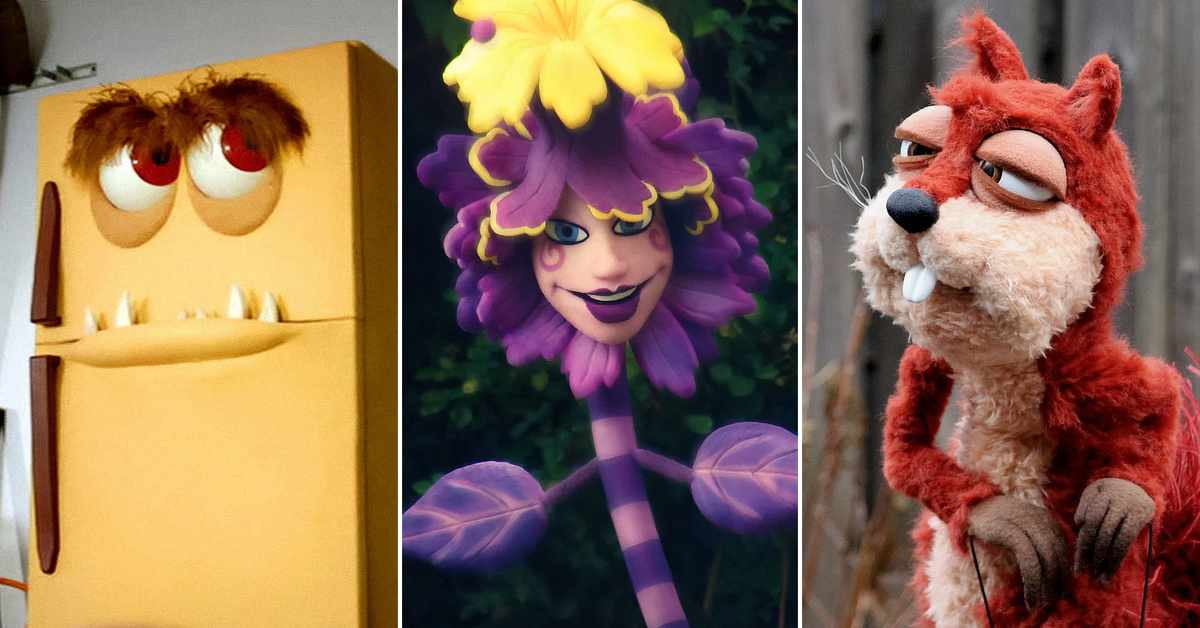
Three side-by-side images of expressive character puppets. On the left, a beige refrigerator is styled as a face with droopy red eyes, bushy brown eyebrows, a horizontal mouth with four small pointed teeth, and a brown handle. In the center, a purple flower character with layered petals framing a human-like face smiles mischievously beneath a large yellow blossom, with a striped purple stem and leaf-like arms. On the right, a red squirrel puppet with fluffy fur, half-closed eyes, a black nose, long white whiskers, and oversized front teeth stands with its small paws raised against a blurred outdoor background.
From kitchen appliance to woodland critter, these puppet characters showcase a wide range of creative designs. Images via Furry Puppet Studio

A guest post by Stephanie T. of Furry Puppet Studio.

Most of us are taught to design on paper first. Sketch the idea, lock it down, then go make it. At Furry Puppet Studio, a custom puppet design studio in SoHo, New York, that is only half the story. Founder and Creative Director Zack Buchman says some of the characters he is proudest of did not start with a drawing at all. They started with a material that would not leave him alone. Over the years that material-first habit has become one of the most reliable parts of how the studio works, and a lot of it translates to a flat or digital practice.

Start with the material, not just the sketch

The studio will be deep in a project when a particular synthetic fur or an odd, unplanned fabric shows up on the bench, and the designers see something inspiring in it. The texture suggests an age, a temperament, a way of moving. “You can plan, but sometimes reality throws some real gold your way,” Buchman says. “I want to remain open to the possibilities it brings.”

Treat the surface as the character, not the wrapper

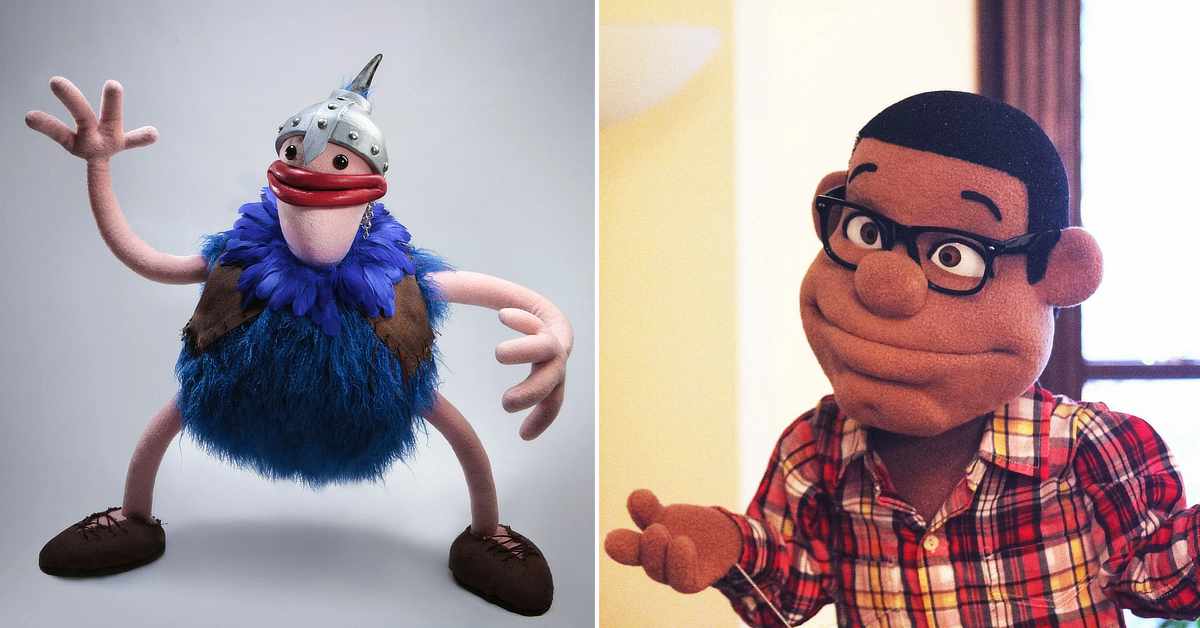
Split image showing two puppets side by side. On the left, a whimsical Viking-style puppet stands with long, thin pink arms and legs, oversized brown shoes, a shaggy blue furry tunic with a feathered blue collar, large red lips, and a silver horned helmet, raising one hand in a playful pose against a plain gray background. On the right, a human-like puppet with medium-brown fabric skin, short black hair, black glasses, and a red plaid button-up shirt shrugs with both hands raised while standing indoors near a bright window.
One looks ready for an adventure. The other looks ready to explain the plan. Images via Furry Puppet Studio

Because nothing off the shelf matched what they were seeing, the team has spent years brushing and producing their own fabric, with a group overseas sourcing and producing textiles. It is a point that should resonate with anyone working in surface or pattern. The surface is not something you apply at the end. Change the nap of the fur or the weight of a cloth and you have changed the feel of the character.

Design in three dimensions, even when you work flat

A puppet has to read from every angle, and the expression can shift as you move around it. A face that reads cheerful straight on can turn anxious from below. “So we try to design everything to be as dimensional as possible,” Buchman says, “and make sure all of those angles agree with each other.” That is why the first form gets carved by hand from foam, where many of the real decisions get worked out in real time. Even if your final piece is flat, it can help to imagine the idea in the third dimension for a moment.

Treat your tools as tools

A person wearing a measuring tape around their neck adjusts the mouth of a puppet mounted on a stand in a workshop. The room has exposed brick walls, tall windows, sewing and crafting tables, and several colorful puppets and puppet parts visible in the background, including a pink puppet, a yellow foam piece, and another partially visible puppet at the right edge.
Every memorable puppet begins with careful craftsmanship, creativity, and attention to detail. Image via Furry Puppet Studio

None of this is anti-technology. The studio uses 3D printing and newer tools all the time, especially for mechanisms and parts, and they have made the work better. Buchman’s point is about order: the tools are most useful once you know what the character is trying to tell you. Software is very good at executing a decision. It is not as good at letting the decision sneak up on you while you are making a mess. Whether your toolkit is digital, AI-assisted, traditional, or some honest mix, the sequence that works here is curiosity first, tool second.

Trust the accident

So much of the process is trying things that fail, then trying the next thing. A test that goes wrong will often hand you a texture or a shape you never would have planned, and that becomes the character. The trick is treating the accident as a gift, not a mistake.

Write for Art & Design by Teresa Cowley! Submit your guest post or sponsored collaboration idea on art, design or the creative industry. Share your expertise with a global community of artists and designers.

More from Art and Design By Teresa Cowley
Bold and Unique Abstract Art Ideas in 2025
Looking for a cool way to mix things up? You’re gonna love these unique abstract art design ideas. They’re...
Overhead view of a creative workspace with a laptop displaying a black-and-white face sketch, surrounded by drawing tools, color swatches, pencils, a glass of water, and paper sketches on a light wooden desk.
How to Manage Business and Keep Your Creative Spark
Creative work shouldn’t feel buried under admin. This guide shows how digital artists can simplify pricing,...
This is an image of two models walking down a fashion show runway. The model in the foreground is wearing a sleeveless, powder blue dress with a thigh-high slit, v-neck, and cinched waist with a small belt. The second model is in a bright yellow, long-sleeve dress with a hood, and a belt tied at the waist. They are walking past rows of seated spectators, who are blurred in the background, emphasizing the models. Above the spectators, large electronic displays show various text and numbers, related to the fashion industry’s scheduling cycle. The setting conveys a high-energy, glamorous fashion show atmosphere.
The Rhythm of Fashion's Schedule
Dive into the world of fashion's seasonal scheduling with my latest blog post! We're unpacking the secrets...

Avatar photo

Stephanie T. writes for Furry Puppet Studio, a custom puppet design studio in SoHo, New York, founded by Zack Buchman. The studio builds custom puppets and characters for film, television, music video, and advertising. See more on Instagram at @furrypuppet.

0 Comments

Leave a Reply

Avatar placeholder

Your email address will not be published. Required fields are marked *