Home > Blog > Art and Design Inspiration > Renaissance Echoes in Modern Art

Embracing the Renaissance: A Timeless Influence on Modern Art and Design

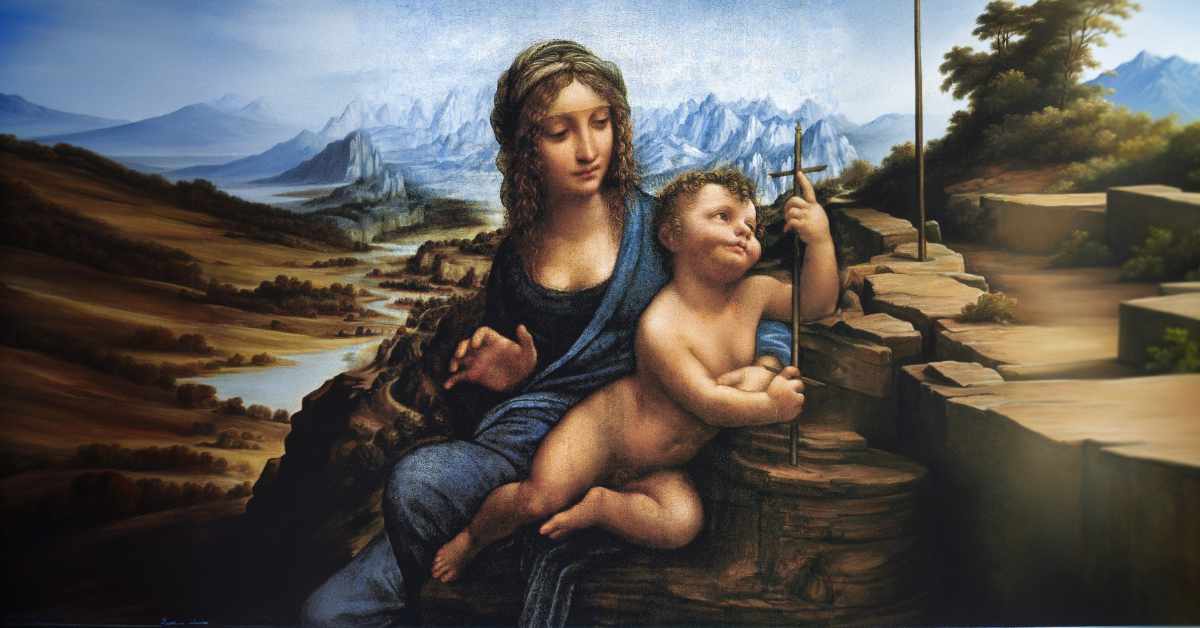
This image features a painting of a woman holding a child on her lap, rendered in a style reminiscent of Renaissance art. The woman, dressed in a flowing blue robe, gently supports the child with her left arm and hand. The child, nude except for a subtle blue sash, looks upward while grasping a tall thin cross. Both figures are depicted with soft, idealized features typical of classical artworks. The background presents a panoramic landscape, consisting of a river valley leading towards distant, jagged mountains. The valley is marked by patches of forests and fields in varying shades of brown and green. To the right, the terrain transitions into rocky cliffs and winding paths, indicating a rugged terrain. The overall composition and color palette give the painting a serene and timeless quality.
Leonardo da Vinci's Madonna of the Yarnwinder (1501). (This image was extended on the sides with AI to better fit my blog image size.)

The Renaissance, a time of remarkable creativity and innovation, continues to leave its mark on the art and design world today. Let’s dive into the fascinating history of the Renaissance and explore how its legacy shapes contemporary art and design.

A Brief History of the Renaissance

The Renaissance, spanning roughly from the 14th to the 17th century, was a cultural movement that began in Italy and spread across Europe. This era marked a revival of classical learning and wisdom, inspired by the art and literature of ancient Greece and Rome. Artists like Leonardo da Vinci, Michelangelo, and Raphael pushed the boundaries of creativity, introducing techniques and concepts that transformed art forever.

The Lasting Influence on Modern Art

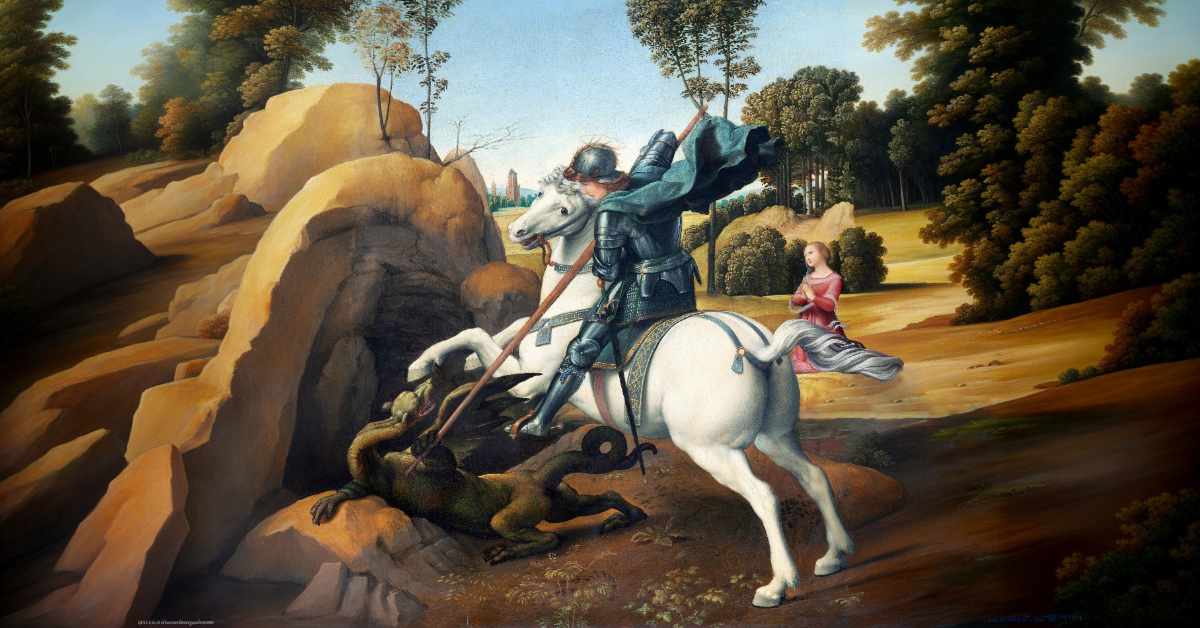
This image depicts a classical scene where a knight in shining armor, mounted on a white horse, defeats a dragon. The knight, dressed in elaborate steel armor, holds a lance poised to strike the dragon beneath him. The dragon, green with scales, lies partially on a rock with a visible wound from the knight’s weapon. The knight's cape flows dramatically behind him, adding to the intensity of the scene. In the background, a woman dressed in a red gown watches the scene from a safe distance, standing near the edge of a forest. The landscape features rocky terrains and lush greenery, with distant trees and undulating hills stretching into the background. This traditional depiction of the Saint George and the Dragon myth emphasizes themes of bravery and heroism in a serene, pastoral setting.
Raphael's Saint George and the Dragon (ca. 1506). (This image was extended on the sides with AI to better fit my blog image size.)
  • Realism and the Human Form: Renaissance artists were pioneers in capturing the human form with unparalleled realism. They studied anatomy, experimented with light and shadow, and perfected the use of perspective to create lifelike images. Modern artists continue to draw inspiration from these techniques, striving to portray the human experience with similar depth and authenticity.

  • Classical Motifs and Themes: The Renaissance saw a resurgence of classical themes and motifs, which are still prevalent in modern art. Whether it’s through the use of mythological subjects or architectural elements, the influence of the Renaissance can be seen in various contemporary works, blending the old with the new in a harmonious way.

  • The Artist’s Role in Society: Renaissance artists elevated the status of the artist, emphasizing individuality and self-expression. Today, artists and designers continue this tradition, using their work to convey personal messages and evoke emotional responses from their audience.

  • The Renaissance and Graphic Design: The Renaissance wasn’t just about painting and sculpture; it also revolutionized design. The period’s renewed interest in classical art led to the development of innovative typography and lettering styles. The use of perspective in art from this era also influenced graphic design, helping designers create more dynamic and visually appealing compositions.

  • Similarities Between Renaissance and Modern Art: Despite the centuries that separate them, Renaissance and modern art share several core principles. Both periods emphasize perspective and focus on specific objects or subjects. This continuity shows that the foundational ideas of art have remained relevant, continually inspiring new generations of artists.

How Art Has Evolved Since the Renaissance

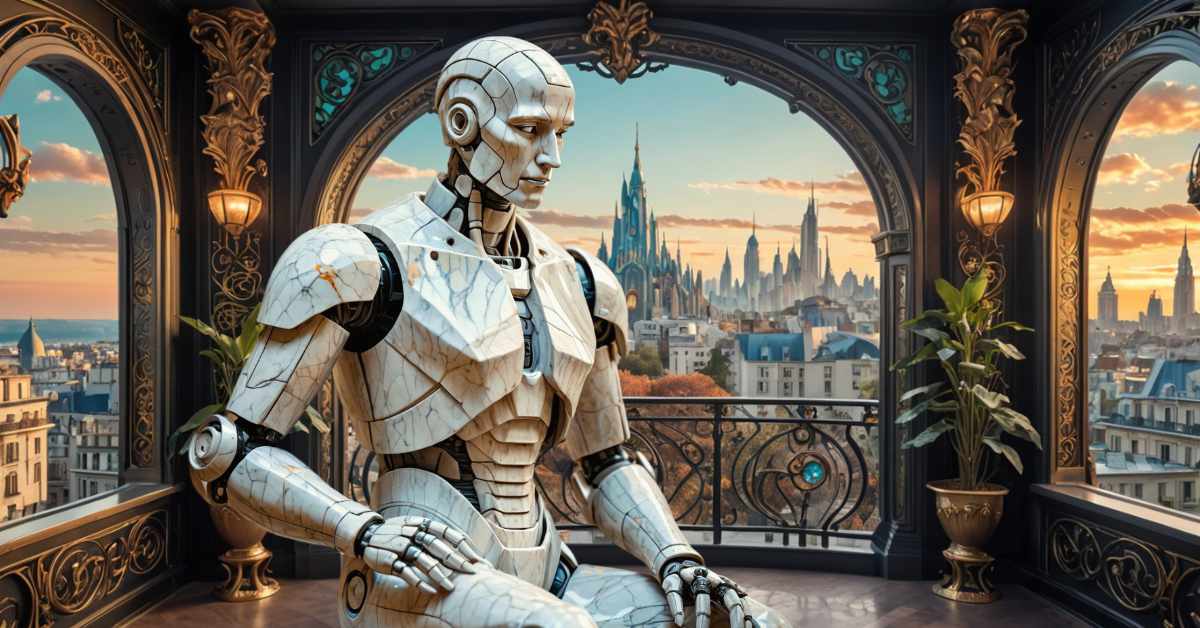
This image features a humanoid robot seated in an ornate, neo-Gothic style balcony overlooking a cityscape at sunset. The robot, designed with a highly detailed, marble-like texture, exhibits intricate joints and segments, resembling an advanced, artistic piece of technology. It gazes contemplatively towards the horizon, where a dramatic skyline of spired buildings is silhouetted against an orange and blue sky. The balcony setting includes elegant wrought-iron railings and detailed arches that frame the view. A decorative lamp and a lush potted plant add a touch of warmth and life to the scene. The composition and lighting of the image create a contrast between the robot's synthetic nature and the historical, almost romantic ambiance of the setting, highlighting themes of technology in harmony with human heritage.
A blend of new and old. As I was working on this post, i thought it would be interesting to mix something futuristic with a scene that looks like it might have come from the Renaissance are.

While the Renaissance laid the groundwork, art has evolved to become more personal and introspective. Modern artists often infuse their work with their own voices and experiences, creating pieces that resonate on an individual level. This shift towards personal expression contrasts with the Renaissance’s broader focus on classical ideals and collective human experience.

Exploring the Renaissance in Your Own Work

For artists and designers looking to incorporate Renaissance influences into their projects, consider the following tips:

  • Study the Masters: Spend time analyzing works by Leonardo da Vinci, Michelangelo, and other Renaissance greats. Pay attention to their use of light, shadow, and perspective.
  • Experiment with Realism: Try your hand at creating lifelike images, focusing on the details that bring a subject to life.
  • Incorporate Classical Elements: Use motifs and themes from ancient Greece and Rome to add a timeless quality to your work.
  • Embrace Individuality: Like Renaissance artists, don’t be afraid to let your unique perspective shine through in your art.

Bridging Past and Present in Art and Design

The Renaissance was a period of unparalleled artistic achievement, and its influence remains a powerful force in today’s art and design world. By understanding and embracing this rich heritage, contemporary artists and designers can continue to innovate and inspire, bridging the past with the present in beautiful and unexpected ways.

More from Art and Design By Teresa Cowley
Surrealism offers a unique way for art enthusiasts to explore dreams, thoughts and ideas.
Canvas of Dreams: An Art Enthusiast's Journey
Step into an enchanting world where dreams fuel artistic fervor, embarking on an Art Enthusiast's Journey...
The image is a collage with three main sections overlaid on a faded outdoor background of a couple under a tree. The central focus features the words "Scam Alert" in bold red text, arched over the couple's photo. Below the text is a red triangle with a white exclamation mark inside, signifying a warning. Left section: A close-up image of two hands, one wearing an engagement ring, being held gently. The background is blurry greenery. Center section: A photo of a couple standing close under a large tree, embracing affectionately. The woman is wearing a pale pink dress, and the man is in a gray shirt and dark pants. Right section: An image of a formal invitation with ornate borders. The text reads: "You are cordially invited to celebrate the 10th Anniversary of Shunned and Elizabeth Michael. Jan 15th, 2025, 11:00 AM, 417 Seymour St., Kamloops, BC V2C 2G7, Canada." The layout and warning text suggest the image is drawing attention to a possible scam involving this invitation or event.
Wedding Anniversary Art Scam: Beware!
Beware of the wedding anniversary art commission scam! A seemingly innocent inquiry about an illustration...
An artist’s paint palette with greens, reds, yellows black representing festive holiday colours. The palette is framed on either side by red and green Christmas bulb ornaments
Festive Hues: Unwrapping Holiday Colours
Dive into the vibrant world of holiday colors in my latest blog post! From the rich reds of Christmas...

Digital artist and graphic designer, Teresa Cowley

My name is Teresa Cowley, and I'm a digital artist and graphic designer from Vancouver Island, Canada. I focus on abstract and fantasy art as well as digital collage, and like to utilize AI art tools as part of my design process to create new, innovative pieces of art. I strive to create new, unique designs that tell imaginative stories, and I am eager to push the boundaries of what can be expressed with art and technology.

0 Comments

Leave a Reply

Avatar placeholder

Your email address will not be published. Required fields are marked *