Home > Blog > Art Conversations > Yes, Digital Art Is Real Art

Debunking the Myth That Digital Art Isn’t ‘Real’ Art

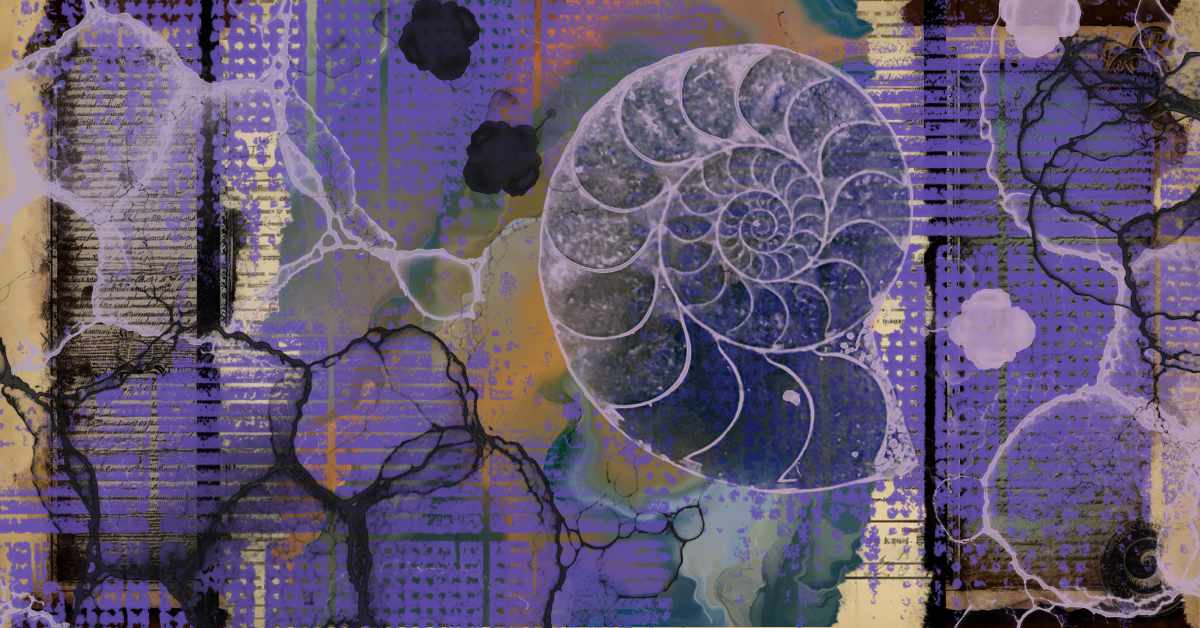
A digital abstract artwork featuring a large ammonite fossil at the center, depicted with detailed spiral segments in shades of gray and white. The background is a layered composition of deep purples, blues, and yellows with a grid-like pattern of dots and vertical lines. Organic, vein-like black and white textures spread across the image, intersecting with ink-like blotches and translucent stains.
mixed media piece I made in Procreate for this post. The ammonite fossil is a custom stamp was made from a photo I took of an actual ammonite fossil in my rock and mineral collection.

Some people still question whether digital art is “real” art. I’m not talking about AI-generated images—I mean work created by artists in apps like Photoshop, Procreate, or Rebelle.

As I’ve been rediscovering traditional art recently, this debate has been on my mind. Digital art should absolutely be considered real art, and here’s why.

The Elements of Art Don’t Disappear

Digital art isn’t just clicking a button and watching an image appear. The same elements that make traditional art work—composition, line variety, texture, tonal values, and colour theory—still apply.

Digital artists have to think about highlights and shadows. We make choices about balance, contrast, and movement. Even in a completely digital piece, those foundations of art are always present. If you’re curious about the basics, the Getty Museum’s Elements of Art is a great resource.

The Process Is Still Creative

Just like with traditional art, digital art usually starts with an idea. Sometimes it’s a loose concept, a thumbnail sketch, or a rough guide to plan out the composition. From there, we build the work up layer by layer—one brushstroke, line, or collage element at a time.

Many of us even mix our own digital “paint,” combining custom colours or building textures to create a piece that feels alive. The process takes practice, creativity, and patience—just like painting on canvas or drawing on paper.

MoMA’s exploration of digital art is a great reminder that the medium is simply another way to express creativity.

Art Is About Intention, Not Tools

A botanical illustration featuring three distinct plant sections arranged in overlapping arcs. The top right section shows a realistic depiction of a citrus branch with dark, matte green leaves and round, textured fruits. The central arc contains a branch with serrated, oval-shaped leaves, colored in shades of blue-gray against a pale yellow background. The bottom left arc displays a cluster of light-toned, star-shaped flowers resembling edelweiss, rendered in sepia tones. The composition combines photographic realism with stylized layout elements.
I can’t recommend checking out Martin Gerlach’s Decorative Groupings enough. These are from 1897 and I think they’re fascinating. Think surrealist paintings only done with a camera instead of on a canvas.

Think of photography. Photographers create with devices too—cameras, lenses, and lighting equipment. No one argues that their work isn’t real art. They still rely on the elements of art, develop a personal style, and connect with their audience through what they create. The International Center of Photography highlights this balance of technique and vision beautifully.

As digital artists, our devices are just our tools. What makes something art isn’t the brush, the canvas, or the app—it’s the intent behind it. It’s about why the artist creates, how we connect to the work we make, and how it resonates with the people who experience it.

Digital art is real art. It’s a valid, expressive, and endlessly creative medium. Whether the tools are traditional or digital, the heart of art is the same: the artist’s vision brought to life.

More From Art and Design By Teresa Cowley
A man wearing glasses and a dark-colored shirt sits at a modern desk, working on a large computer monitor displaying a digital artwork of an explosion in space. The room has a warm, ambient glow from a desk lamp and indirect lighting on the walls. The workspace is neatly arranged with potted plants, a smartphone, a mouse, and a keyboard. A large window in the background lets in natural light, showing an outdoor view. The man appears focused as he interacts with the digital design software on his screen.
Image Composite vs. Collage: Key Differences & Tips
Not sure whether to call your artwork an image composite or a collage? While both involve combining elements,...
An illustration features three people working on a large computer screen, symbolizing website development and optimization. The screen displays various interface elements, including a warning icon. One person is on a ladder holding a large wrench, another is on top of the screen adjusting a gear, and a third is lifting a large gear towards the screen. Surrounding them are floating gears and abstract shapes. The text at the top reads, "HOW PLUGINS CAN TRANSFORM YOUR PROFESSIONAL PORTFOLIO WEBSITE." The illustration has a modern, flat design style with a technology-focused theme.
Transform Your Portfolio with Plugins
Want to take your professional portfolio website to the next level? The right plugins can enhance design,...
Two Awards, One Event - Muse Creative Awards 2021
Embark on an inspiring journey of rediscovery where a return to passion culminated in an unexpected double...

Digital artist and graphic designer, Teresa Cowley

My name is Teresa Cowley, and I'm a digital artist and graphic designer from Vancouver Island, Canada. I focus on abstract and fantasy art as well as digital collage, and like to utilize AI art tools as part of my design process to create new, innovative pieces of art. I strive to create new, unique designs that tell imaginative stories, and I am eager to push the boundaries of what can be expressed with art and technology.

0 Comments

Leave a Reply

Avatar placeholder

Your email address will not be published. Required fields are marked *