Home > Blog > Art and Design Inspiration > How to Start Making Art

The Joy of Starting: Encouragement for Beginner Artists

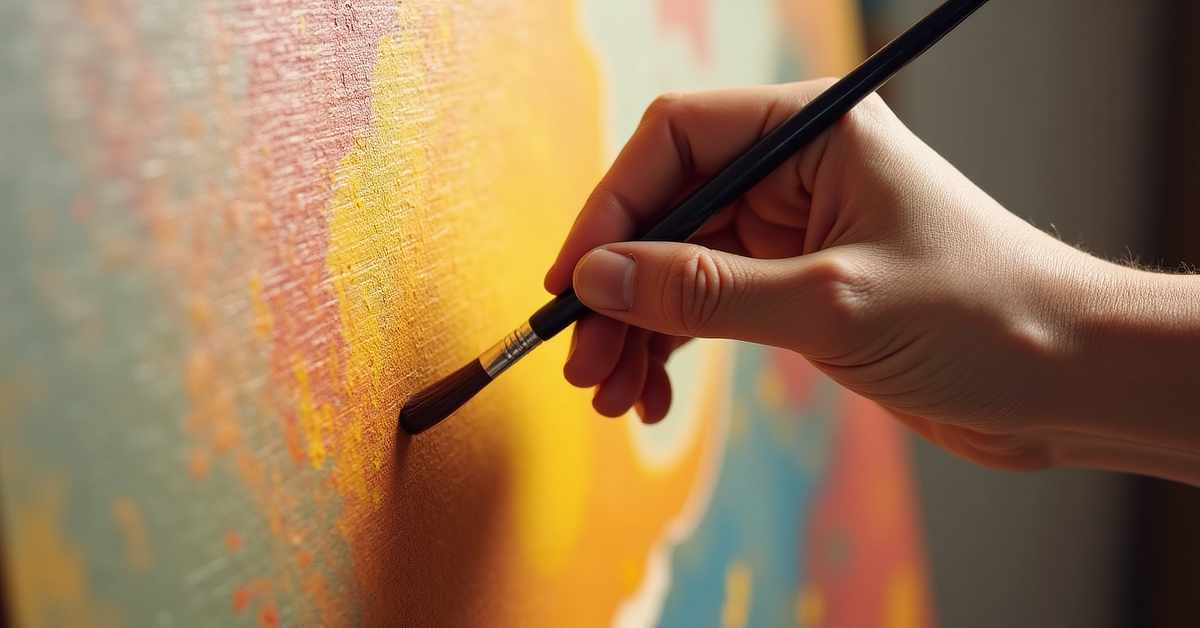
Close-up of a hand holding a paintbrush, applying warm-toned paint—mainly shades of yellow and orange—onto a textured canvas. The painting surface shows blended areas of color, suggesting an abstract or impressionistic style. The lighting highlights the brushstrokes and texture of the canvas.
Vincent van Gogh wrote about the difficulty of beginning, saying: "Great things are done by a series of small things brought together."

Lately, I’ve had a couple of lovely comments on one of my recent posts — the one about creating art on a budget. Both readers mentioned that they felt encouraged and inspired by the tips I shared. Honestly, that meant the world to me. That’s exactly why I write those kinds of posts — to help people who want to make art but might feel hesitant or unsure where to start.

Everyone Starts Somewhere

The art world can be competitive and intimidating. Between social media perfection and professional galleries, creativity can start to feel out of reach. But here’s something important to remember: every artist, even the great masters, had to start somewhere. Their first attempts at portraits or landscapes weren’t masterpieces — they were learning moments.

For instance, if you look at Leonardo da Vinci’s early sketches or Van Gogh’s first paintings you can see how much their style evolved over time. What made the difference was that they kept going. Over time, practice and curiosity shaped their skills into what we now admire in museums and art history books.

If you ever feel stuck comparing your early work to others, this article on overcoming creative self-doubt is worth a read — it’s a reminder that progress matters more than perfection.

Art Is About Exploration

A pile of mixed media components featuring a cut-out paper shape resembling a leaf, painted in vibrant red, green, yellow, and brown swirls. The leaf is placed on top of a blue and white dyed background with a loose marbled pattern, which overlaps a green, text-printed surface resembling a page with wavy blue, green gold and white lines. The composition combines abstract painting, collage, and text elements.
New collage papers! The blue one is dyed with Tintex on plain paper. The green and gold one was painted over a printed page using a Sharpie tip. The leaf is cut from an abstract fluid acrylic painting.

For me, art is all about exploration — following curiosity and seeing where it leads. Sure, I keep the elements of art in mind, but I don’t let rules limit me. I love experimenting with unusual materials and techniques, and sometimes that means using supplies in ways that might surprise you.

For example, one of my favourite budget-friendly discoveries is Tintex fabric dye (some Dollar Stores carry it if you’re on a budget) which can be mixed with water and dropped onto paper using a dropper bottle to create gorgeous, inky-looking effects similar to alcohol inks — but for a fraction of the price. (Now that I think about it, I might try mixing it with alcohol next time and see what happens!)

Another technique I love is dropping fluid acrylic paint onto paper, spraying on lots of water, and then running the end of a Sharpie through it. The result? Stunning, streaky painted textures that make great backgrounds or collage papers. It’s messy, spontaneous, and so satisfying.

If you want more experimental inspiration, check out this Liquify tool tutorial for Procreate or explore free workshops from Milan Art Institute on YouTube. Both are great resources for artists looking to push boundaries and discover new textures or techniques.

The Trick Is to Simply Start

You don’t need fancy art supplies or perfect technique to begin. Maybe you’ll start with the basics — pencils, old brushes, or even improvised tools from around the house. The key is to start anyway. Mistakes will happen (they always do), but that’s part of the process.

Sometimes my favourite pieces have come from “happy accidents” — moments when I didn’t like where something was going, but decided to play with it instead of giving up. More often than not, that’s where the magic happens.

If you’re struggling with perfectionism, I highly recommend reading Failure & Creativity: Why Making ‘Bad Art’ Leads to Innovation and Originality — it’s one of the most liberating reads for creatives at any stage.

Closing Thoughts

If there’s one message I want you to take away, it’s this: don’t wait for the perfect moment, tools, or skill level to create. Just begin. Art is meant to be joyful, expressive, and personal — not perfect. The process itself is where you’ll find your voice, one brushstroke (or dye drop) at a time.

So go grab whatever materials you have nearby and make something — even if it’s messy. Especially if it’s messy. Because that’s where real creativity begins.

More From Art and Design By Teresa Cowley
A person is sitting at a desk in an office, facing a large computer monitor. The monitor displays a cartoonish, stern-looking man with an intense expression, fists clenched against his cheeks. The cartoon character appears to be speaking, with a speech bubble that reads, “It is I, Comic Sans!” The person at the desk, seen from behind, has their hands raised to their head in frustration, and a speech bubble above them exclaims, “No! Get out of here!!!” The office is tidy, with shelves of organized binders, boxes, and a corkboard on the wall. Office supplies, such as a pen holder and papers, are on the desk.
The Comic Sans Controversy
Comic Sans: the font that sparks more design rants than any other. But why the hate? From its overuse...
A laptop sits on a desk with its screen displaying a white accessibility icon of a person in a wheelchair. The scene is lit with soft, gradient lighting in shades of pink, purple, and blue. Beside the laptop, there is a white computer mouse with a similar lighting effect. In the background, smooth, curved shapes add to the modern and colourful aesthetic.
Accessibility: 9 Essential Design Principles
Unlock inclusive design with essential accessibility principles! Discover how to enhance user experience...
A fashion designer is working in a well-organized studio. She is adjusting a vibrant, colorful dress on a mannequin. The dress features a bold floral pattern with shades of purple, orange, and blue, and has sheer, long blue sleeves with lace trim. The designer holds a paintbrush in one hand and wears a measuring tape around her neck. In the background, there is a rack of neatly arranged clothes, a white desk with fabric rolls, and a portrait of a woman on the wall. A table in the foreground displays a paint palette, brushes, and a fabric swatch with a similar floral design. The room is brightly lit by large windows.
Art to Wear: Fashion as a Canvas
Fashion and art collide to create wearable masterpieces, where clothing becomes a dynamic canvas. This...

Digital artist and graphic designer, Teresa Cowley

My name is Teresa Cowley, and I'm a digital artist and graphic designer from Vancouver Island, Canada. I focus on abstract and fantasy art as well as digital collage, and like to utilize AI art tools as part of my design process to create new, innovative pieces of art. I strive to create new, unique designs that tell imaginative stories, and I am eager to push the boundaries of what can be expressed with art and technology.

0 Comments

Leave a Reply

Avatar placeholder

Your email address will not be published. Required fields are marked *