Home > Blog > Art and Design Inspiration > The Art of the Wave

The Art of the Wave: Flow, Rhythm, and Timeless Design

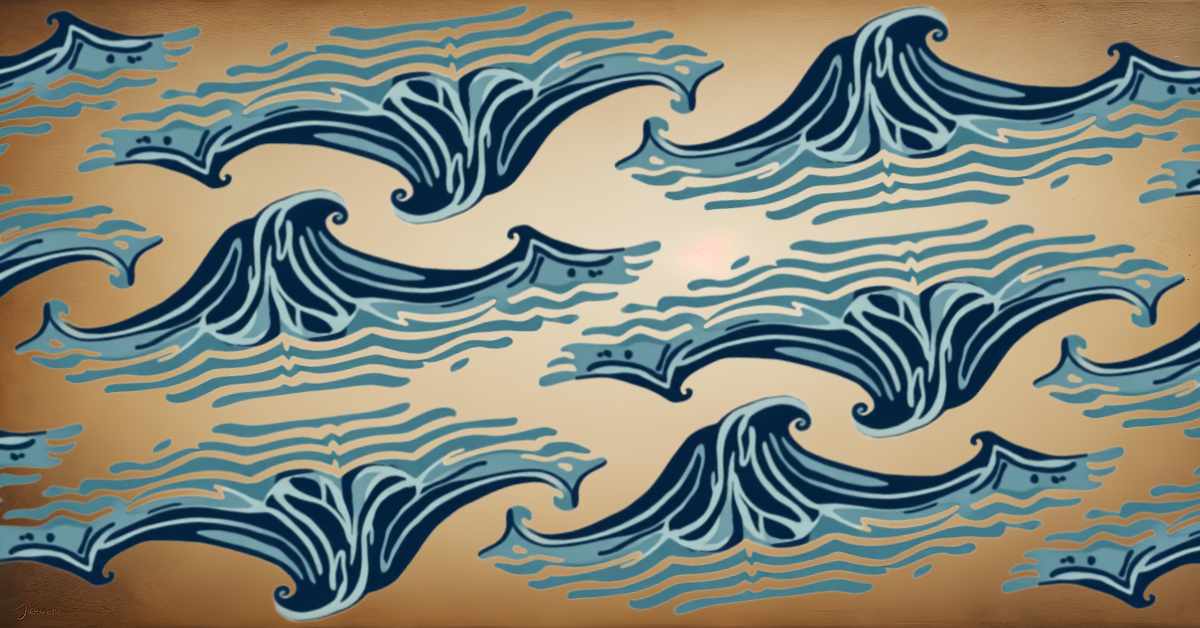
A stylized pattern of ocean waves in varying shades of blue set against a beige background. The waves are illustrated with curved, flowing lines and symmetrical shapes, creating a rhythmic, repeating design. Some of the wave crests resemble abstract bird or fish heads, adding a whimsical touch to the composition. The overall aesthetic is reminiscent of traditional Japanese wave art with a modern, graphic twist.
A pattern I made using a simple stylized wave motif inspired by traditional Japanese art.

There’s something irresistible about a wave. Whether crashing dramatically or curling gently, waves have long been a source of fascination—not just in nature, but in art, symbolism, and design. Their curving forms evoke movement, emotion, and the raw energy of the sea. And across cultures and centuries, the wave motif has remained a timeless symbol of both beauty and force.

Why Waves Captivate Us

At a basic level, waves are just repeating curves. But their appeal runs deeper. The wave is one of the few motifs that naturally blends structure and motion—a looping shape that suggests rhythm and continuous change. Like spirals, they guide the eye. Like water itself, they shift between calm and chaos.

In design, waves can suggest elegance, freedom, or transformation. In art, they often symbolize emotional depth, the passage of time, or the unstoppable pull of nature.

A Motif Across Cultures

Variations of the Wave Motif

  • Stylized curves: Often used in Art Nouveau or modern tattoo art to create a natural, flowing visual rhythm.

  • Repeating wave borders: Popular in ancient ceramics and textiles to symbolize eternity or the repetition of time.

  • Abstract waveforms: Common in digital and contemporary art to express motion, tension, or emotional states.

How to Use It in Your Own Work

If you’re an artist or designer, the wave is a versatile motif to play with:

  • Use smooth curves to create a sense of harmony or rhythm.

  • Layer wave patterns to build depth or suggest motion.

  • Combine waves with other motifs (like spirals, dots, or geometric lines) for added texture and meaning.

Whether you’re aiming for peaceful, meditative visuals or bold, energetic statements, the wave is a shape that adapts—and always adds movement.

More From Art and Design By Teresa Cowley
The image shows wooden Scrabble-style tiles scattered in a pile. Five tiles in the center spell out the word "DREAM" in black, uppercase letters. Each tile has a small number in the lower right corner indicating its point value, such as "D" worth 2 points and "M" worth 3 points. The surrounding tiles are blank or face down, creating a textured wooden background.
Effective Ways for Creatives to Boost Visibility
Ready to boost your creative career? This post dives into actionable tips for artists and designers to...
This image shows a woman standing indoors with her face obscured by a large, red stamp-like overlay that reads "EXPOSED" in capital letters. Below the word, there's an additional message that says "WE ARE LOOKING FOR AMBASSADORS DM US TO APPLY" in white lettering against a semi-transparent black background. The woman appears to be dressed formally, indicated by a black garment and a pearl necklace. The environment suggests an indoor setting with soft lighting and a blurred background, in a room with a window to her left. The image is part of a blog post exposing the Juno Valentina ambassador scam on Instagram and warns against getting involved.
Scam Alert: Juno Valentina Exposed
Dive into my latest blog post to uncover the shocking truths about the Juno Valentina ambassador program...
The image shows a workspace in digital art software. The artwork in progress is an abstract close-up of a butterfly wing with thick black outlines dividing various sections. These sections are filled with vibrant, watercolour-like gradients in shades of teal, blue, purple, orange, yellow, and pink. The interface displays a variety of tools and settings on both sides of the screen, including brush types, colour palettes, layer controls, and opacity sliders. The left panel focuses on drawing and painting tools, while the right panel includes layer management and colour selection.
Rebelle: Digital Painting That Feels Real
Curious about digital painting that actually feels like the real thing? Meet Rebelle—software that mimics...

Digital artist and graphic designer, Teresa Cowley

My name is Teresa Cowley, and I'm a digital artist and graphic designer from Vancouver Island, Canada. I focus on abstract and fantasy art as well as digital collage, and like to utilize AI art tools as part of my design process to create new, innovative pieces of art. I strive to create new, unique designs that tell imaginative stories, and I am eager to push the boundaries of what can be expressed with art and technology.

0 Comments

Leave a Reply

Avatar placeholder

Your email address will not be published. Required fields are marked *